new

Get trending papers in your email inbox!

Subscribe

Daily Papers

byAK and the research community

Jul 17

LMM-R1: Empowering 3B LMMs with Strong Reasoning Abilities Through Two-Stage Rule-Based RL

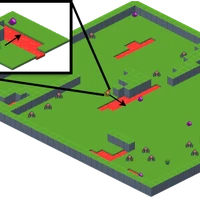
Enhancing reasoning in Large Multimodal Models (LMMs) faces unique challenges from the complex interplay between visual perception and logical reasoning, particularly in compact 3B-parameter architectures where architectural constraints limit reasoning capacity and modality alignment. While rule-based reinforcement learning (RL) excels in text-only domains, its multimodal extension confronts two critical barriers: (1) data limitations due to ambiguous answers and scarce complex reasoning examples, and (2) degraded foundational reasoning induced by multimodal pretraining. To address these challenges, we propose \method, a two-stage framework adapting rule-based RL for multimodal reasoning through Foundational Reasoning Enhancement (FRE) followed by Multimodal Generalization Training (MGT). The FRE stage first strengthens reasoning abilities using text-only data with rule-based RL, then the MGT stage generalizes these reasoning capabilities to multimodal domains. Experiments on Qwen2.5-VL-Instruct-3B demonstrate that \method achieves 4.83\% and 4.5\% average improvements over baselines in multimodal and text-only benchmarks, respectively, with a 3.63\% gain in complex Football Game tasks. These results validate that text-based reasoning enhancement enables effective multimodal generalization, offering a data-efficient paradigm that bypasses costly high-quality multimodal training data.

  • 10 authors
·
Mar 10, 2025 3

Traffic-R1: Reinforced LLMs Bring Human-Like Reasoning to Traffic Signal Control Systems

Traffic signal control (TSC) is vital for mitigating congestion and sustaining urban mobility. In this paper, we introduce Traffic-R1, a foundation model with human-like reasoning for TSC systems. Our model is developed through self-exploration and iteration of reinforced large language models (LLMs) with expert guidance in a simulated traffic environment. Compared to traditional reinforcement learning (RL) and recent LLM-based methods, Traffic-R1 offers three significant advantages. First, Traffic-R1 delivers zero-shot generalisation, transferring unchanged to new road networks and out-of-distribution incidents by utilizing its internal traffic control policies and human-like reasoning. Second, its 3B-parameter architecture is lightweight enough for real-time inference on mobile-class chips, enabling large-scale edge deployment. Third, Traffic-R1 provides an explainable TSC process and facilitates multi-intersection communication through its self-iteration and a new synchronous communication network. Extensive benchmarks demonstrate that Traffic-R1 sets a new state of the art, outperforming strong baselines and training-intensive RL controllers. In practice, the model now manages signals for more than 55,000 drivers daily, shortening average queues by over 5% and halving operator workload. Our checkpoint is available at https://huggingface.co/Season998/Traffic-R1.

  • 7 authors
·
Aug 4, 2025

Exploring the Reasoning Depth of Small Language Models in Software Architecture: A Multidimensional Evaluation Framework Towards Software Engineering 2.0

In the era of "Software Engineering 2.0" (SE 2.0), where intelligent agents collaborate with human engineers, Generative AI is advancing beyond code generation into Software Architecture (SA). While Large Language Models (LLMs) demonstrate superior capabilities, computational costs and data privacy concerns drive interest in Small Language Models (SLMs) with fewer than 7 billion parameters. However, the reasoning limits of these resource-constrained models remain unexplored. This study benchmarks 10 state-of-the-art SLMs on Architectural Decision Records generation, introducing a multi-dimensional framework evaluating Technical Compliance and Semantic Diversity. Our empirical results reveal a significant reasoning gap: models above the 3B-parameter threshold demonstrate robust zero-shot capabilities, while sub-2B models show the strongest BERTScore gains from Fine-Tuning, though compliance improvements are not guaranteed. Contrary to assumptions regarding context saturation, Few-Shot prompting serves as a highly effective calibration mechanism for select mid-sized models with short context windows. Furthermore, high semantic diversity in off-the-shelf small models often correlates with hallucination rather than productive exploration. These findings establish a rigorous baseline for deploying sustainable, locally hosted architectural assistants.

  • 5 authors
·
Mar 6

Hybrid Gated Flow (HGF): Stabilizing 1.58-bit LLMs via Selective Low-Rank Correction

The deployment of Large Language Models (LLMs) on edge devices is fundamentally constrained by the "Memory Wall" -- a hardware limitation where memory bandwidth, not compute, becomes the bottleneck. Recent 1.58-bit quantization techniques (e.g., BitNet b1.58) dramatically reduce memory footprint but typically incur a perplexity degradation of 20-25% compared to FP16 baselines. In this work, we introduce Hybrid Gated Flow (HGF), a dual-stream architecture that couples a 1.58-bit ternary backbone with a learnable, low-rank FP16 correction path controlled by adaptive gates. Through extensive experiments on the TinyStories dataset across two training regimes (2500 and 3500 steps), we demonstrate that HGF 5.4 achieves a validation loss of 0.9306 compared to BitNet's 1.0294, recovering approximately 55% of the quality gap between pure ternary quantization and the FP16 baseline (0.8490). This recovery is achieved with only ~12-15% memory overhead beyond the ternary backbone. Furthermore, we provide empirical evidence for an emergent phenomenon: quantization as structural regularization. While a full-precision differential attention baseline (Diff_Only) exhibited training instability with validation loss exceeding 1.68, the ternary-anchored HGF maintained robust convergence throughout training. Finally, we report preliminary results extending this architecture to 1.2B and 3B parameter models trained on SlimPajama and FineWeb-Edu. These larger-scale experiments confirm that the architectural stability and quality recovery observed in small-scale proxies scale linearly to production-grade language modeling regimes.

  • 1 authors
·
Feb 4

Linear Attention Architectures: Mechanisms, Trade-offs, and Cross-Layer Routing

Self-attention lets each token retrieve information from the full context, but its quadratic cost in sequence length limits training and inference at long context. This paper presents a comparative study of softmax attention and four recent recurrent linear-attention architectures: DeltaNet, Gated DeltaNet, Kimi Delta Attention, and Gated DeltaNet-2. We express these mechanisms in a common recurrent-memory notation, making explicit how they differ in expressivity, memory decay, erase and write control, training throughput, and implementation complexity. Our experiments center on 350M-parameter models trained for 15B tokens, and include optimizer and learning-rate comparisons, hybrid-versus-pure stack comparisons, sequence-length runtime measurements, larger DeltaNet runs at 1.3B and 3B parameters, and a small set of downstream evaluations. The reported speed results measure training throughput and iteration time; we do not provide an empirical inference-speed benchmark. Within the reported 350M-parameter, 15B-token sweep, Kimi Delta Attention with Muon reaches the lowest final validation loss, a pure Gated DeltaNet stack trained with AdamW has the highest normalized training throughput, hybrid stacks generally improve loss at a throughput cost, and Muon consistently lowers final validation loss relative to AdamW in the matched architecture settings we evaluate. We introduce and evaluate lightweight cross-layer routing mechanisms for DeltaNet-style memories. The most natural DeltaNet-inspired formulation, forwarding a lower layer's delta-rule write error into the next layer's value target, does not improve over matched baselines. Routing into the aligned hidden stream and forwarding the write value instead yields a modest improvement in the matched runs we report: Cross-Layer Value Routing (CLVR) lowers final validation loss for both DeltaNet and Gated DeltaNet.

ethz ETH Zurich
·
Jul 7 2

Agentic Discovery of Neural Architectures: AIRA-Compose and AIRA-Design

Toward recursive self-improvement, we investigate LLM agents autonomously designing foundation models beyond standard Transformers. We introduce a dual-framework approach: AIRA-Compose for high-level architecture search, and AIRA-Design for low-level mechanistic implementation. AIRA-Compose uses 11 agents to explore fundamental computational primitives under a 24-hour budget. Agents evaluate million-parameter candidates, extrapolating top designs to 350M, 1B, and 3B scales. This yields 14 architectures across two families: AIRAformers (Transformer-based) and AIRAhybrids (Transformer-Mamba). Pre-trained at 1B scale, these consistently outperform Llama 3.2 and Composer-found baselines. On downstream tasks, AIRAformer-D and AIRAhybrid-D improve accuracy by 2.4% and 3.8% over Llama 3.2. Furthermore, AIRA-Compose finds models with highly efficient scaling frontiers: AIRAformer-C scales 54% and 71% faster than Llama 3.2 and Composer's best Transformer, while AIRAhybrid-C outscales Nemotron-2 by 23% and Composer's best hybrid by 37%. AIRA-Design tasks 20 agents with writing novel attention mechanisms for long-range dependencies and high-performing training scripts. On the Long Range Arena benchmark, agent-designed architectures reach within 2.3% and 2.6% of human state-of-the-art on document matching and text classification. On the Autoresearch benchmark, Greedy Opus 4.5 achieves 0.968 validation bits-per-byte under a fixed time budget, surpassing the published minimum. Together, these frameworks show AI agents can autonomously discover architectures and algorithmic optimizations matching or surpassing hand-designed baselines. This establishes a powerful paradigm for discovering next-generation foundation models, marking a clear step toward recursive self-improvement.

  • 8 authors
·
May 14

SnapFlow: One-Step Action Generation for Flow-Matching VLAs via Progressive Self-Distillation

Vision-Language-Action (VLA) models based on flow matching -- such as pi0, pi0.5, and SmolVLA -- achieve state-of-the-art generalist robotic manipulation, yet their iterative denoising, typically 10 ODE steps, introduces substantial latency: on a modern GPU, denoising alone accounts for 80% of end-to-end inference time. Naively reducing the step count is unreliable, degrading success on most tasks due to the velocity field being uncalibrated for single-step jumps. We present SnapFlow, a plug-and-play self-distillation method that compresses multi-step denoising into a single forward pass (1-NFE) for flow-matching VLAs. SnapFlow mixes standard flow-matching samples with consistency samples whose targets are two-step Euler shortcut velocities computed from the model's own marginal velocity predictions, avoiding the trajectory drift caused by conditional velocities, as we analyze theoretically. A zero-initialized target-time embedding lets the network switch between local velocity estimation and global one-step generation within a single architecture. SnapFlow requires no external teacher, no architecture changes, and trains in ~12h on a single GPU. We validate on two VLA architectures spanning a 6x parameter range, with identical hyperparameters: on pi0.5 (3B) across four LIBERO suites (40 tasks, 400 episodes), SnapFlow achieves 98.75% average success -- matching the 10-step teacher at 97.75% and slightly exceeding it -- with 9.6x denoising speedup and end-to-end latency reduced from 274ms to 83ms; on SmolVLA (500M), it reduces MSE by 8.3% with 3.56x end-to-end acceleration. An action-step sweep on long-horizon tasks reveals that SnapFlow maintains its advantage across execution horizons, achieving 93% at n_act=5 where the baseline reaches only 90%. SnapFlow is orthogonal to layer-distillation and token-pruning approaches, enabling compositional speedups.

  • 6 authors
·
Apr 6

Step-Audio: Unified Understanding and Generation in Intelligent Speech Interaction

Real-time speech interaction, serving as a fundamental interface for human-machine collaboration, holds immense potential. However, current open-source models face limitations such as high costs in voice data collection, weakness in dynamic control, and limited intelligence. To address these challenges, this paper introduces Step-Audio, the first production-ready open-source solution. Key contributions include: 1) a 130B-parameter unified speech-text multi-modal model that achieves unified understanding and generation, with the Step-Audio-Chat version open-sourced; 2) a generative speech data engine that establishes an affordable voice cloning framework and produces the open-sourced lightweight Step-Audio-TTS-3B model through distillation; 3) an instruction-driven fine control system enabling dynamic adjustments across dialects, emotions, singing, and RAP; 4) an enhanced cognitive architecture augmented with tool calling and role-playing abilities to manage complex tasks effectively. Based on our new StepEval-Audio-360 evaluation benchmark, Step-Audio achieves state-of-the-art performance in human evaluations, especially in terms of instruction following. On open-source benchmarks like LLaMA Question, shows 9.3% average performance improvement, demonstrating our commitment to advancing the development of open-source multi-modal language technologies. Our code and models are available at https://github.com/stepfun-ai/Step-Audio.

  • 121 authors
·
Feb 17, 2025

Uni-X: Mitigating Modality Conflict with a Two-End-Separated Architecture for Unified Multimodal Models

Unified Multimodal Models (UMMs) built on shared autoregressive (AR) transformers are attractive for their architectural simplicity. However, we identify a critical limitation: when trained on multimodal inputs, modality-shared transformers suffer from severe gradient conflicts between vision and text, particularly in shallow and deep layers. We trace this issue to the fundamentally different low-level statistical properties of images and text, while noting that conflicts diminish in middle layers where representations become more abstract and semantically aligned. To overcome this challenge, we propose Uni-X, a two-end-separated, middle-shared architecture. Uni-X dedicates its initial and final layers to modality-specific processing, while maintaining shared parameters in the middle layers for high-level semantic fusion. This X-shaped design not only eliminates gradient conflicts at both ends but also further alleviates residual conflicts in the shared layers. Extensive experiments validate the effectiveness of Uni-X. Under identical training conditions, Uni-X achieves superior training efficiency compared to strong baselines. When scaled to 3B parameters with larger training data, Uni-X matches or surpasses 7B AR-based UMMs, achieving a GenEval score of 82 for image generation alongside strong performance in text and vision understanding tasks. These results establish Uni-X as a parameter-efficient and scalable foundation for future unified multimodal modeling. Our code is available at https://github.com/CURRENTF/Uni-X

  • 5 authors
·
Sep 29, 2025

One LR Doesn't Fit All: Heavy-Tail Guided Layerwise Learning Rates for LLMs

Learning rate configuration is a fundamental aspect of modern deep learning. The prevailing practice of applying a uniform learning rate across all layers overlooks the structural heterogeneity of Transformers, potentially limiting their effectiveness as the backbone of Large Language Models (LLMs). In this paper, we introduce Layerwise Learning Rate (LLR), an adaptive scheme that assigns distinct learning rates to individual Transformer layers. Our method is grounded in Heavy-Tailed Self-Regularization (HT-SR) theory, which characterizes the empirical spectral density (ESD) of weight correlation matrices to quantify heavy-tailedness. Layers with weaker heavy-tailedness are assigned larger learning rates to accelerate training, while layers with stronger heavy-tailedness receive smaller learning rates. By tailoring learning rates in this manner, LLR promotes more balanced training across layers, leading to faster convergence and improved generalization. Extensive experiments across architectures ranging from LLaMA to GPT-nano, optimizers including AdamW and Muon, and model scales from 60M to 3B parameters with up to 100B training tokens demonstrate the effectiveness of LLR. LLR achieves up to 1.5x training speedup and consistently outperforms uniform-learning-rate baselines. In particular, it improves the average zero-shot accuracy of 1B models from 47.09% to 49.02%, and that of 3B models from 48.58% to 50.61%. A key advantage of LLR is its low tuning overhead: it can transfer nearly optimal learning-rate settings directly from the uniform baseline. Code is available at https://github.com/hed-ucas/Layer-wise-Learning-Rate.

  • 5 authors
·
May 26

Kimi Linear: An Expressive, Efficient Attention Architecture

We introduce Kimi Linear, a hybrid linear attention architecture that, for the first time, outperforms full attention under fair comparisons across various scenarios -- including short-context, long-context, and reinforcement learning (RL) scaling regimes. At its core lies Kimi Delta Attention (KDA), an expressive linear attention module that extends Gated DeltaNet with a finer-grained gating mechanism, enabling more effective use of limited finite-state RNN memory. Our bespoke chunkwise algorithm achieves high hardware efficiency through a specialized variant of the Diagonal-Plus-Low-Rank (DPLR) transition matrices, which substantially reduces computation compared to the general DPLR formulation while remaining more consistent with the classical delta rule. We pretrain a Kimi Linear model with 3B activated parameters and 48B total parameters, based on a layerwise hybrid of KDA and Multi-Head Latent Attention (MLA). Our experiments show that with an identical training recipe, Kimi Linear outperforms full MLA with a sizeable margin across all evaluated tasks, while reducing KV cache usage by up to 75% and achieving up to 6 times decoding throughput for a 1M context. These results demonstrate that Kimi Linear can be a drop-in replacement for full attention architectures with superior performance and efficiency, including tasks with longer input and output lengths. To support further research, we open-source the KDA kernel and vLLM implementations, and release the pre-trained and instruction-tuned model checkpoints.

moonshotai Moonshot AI
·
Oct 30, 2025 4

Attention Residuals

Residual connections with PreNorm are standard in modern LLMs, yet they accumulate all layer outputs with fixed unit weights. This uniform aggregation causes uncontrolled hidden-state growth with depth, progressively diluting each layer's contribution. We propose Attention Residuals (AttnRes), which replaces this fixed accumulation with softmax attention over preceding layer outputs, allowing each layer to selectively aggregate earlier representations with learned, input-dependent weights. To address the memory and communication overhead of attending over all preceding layer outputs for large-scale model training, we introduce Block AttnRes, which partitions layers into blocks and attends over block-level representations, reducing the memory footprint while preserving most of the gains of full AttnRes. Combined with cache-based pipeline communication and a two-phase computation strategy, Block AttnRes becomes a practical drop-in replacement for standard residual connections with minimal overhead. Scaling law experiments confirm that the improvement is consistent across model sizes, and ablations validate the benefit of content-dependent depth-wise selection. We further integrate AttnRes into the Kimi Linear architecture (48B total / 3B activated parameters) and pre-train on 1.4T tokens, where AttnRes mitigates PreNorm dilution, yielding more uniform output magnitudes and gradient distribution across depth, and improves downstream performance across all evaluated tasks.

moonshotai Moonshot AI
·
Mar 16 6

SWE-RM: Execution-free Feedback For Software Engineering Agents

Execution-based feedback like unit testing is widely used in the development of coding agents through test-time scaling (TTS) and reinforcement learning (RL). This paradigm requires scalable and reliable collection of unit test cases to provide accurate feedback, and the resulting feedback is often sparse and cannot effectively distinguish between trajectories that are both successful or both unsuccessful. In contrast, execution-free feedback from reward models can provide more fine-grained signals without depending on unit test cases. Despite this potential, execution-free feedback for realistic software engineering (SWE) agents remains underexplored. Aiming to develop versatile reward models that are effective across TTS and RL, however, we observe that two verifiers with nearly identical TTS performance can nevertheless yield very different results in RL. Intuitively, TTS primarily reflects the model's ability to select the best trajectory, but this ability does not necessarily generalize to RL. To address this limitation, we identify two additional aspects that are crucial for RL training: classification accuracy and calibration. We then conduct comprehensive controlled experiments to investigate how to train a robust reward model that performs well across these metrics. In particular, we analyze the impact of various factors such as training data scale, policy mixtures, and data source composition. Guided by these investigations, we introduce SWE-RM, an accurate and robust reward model adopting a mixture-of-experts architecture with 30B total parameters and 3B activated during inference. SWE-RM substantially improves SWE agents on both TTS and RL performance. For example, it increases the accuracy of Qwen3-Coder-Flash from 51.6% to 62.0%, and Qwen3-Coder-Max from 67.0% to 74.6% on SWE-Bench Verified using TTS, achieving new state-of-the-art performance among open-source models.

  • 9 authors
·
Dec 26, 2025 2

PRISM: Demystifying Retention and Interaction in Mid-Training

We present PRISM, a comprehensive empirical study of mid-training design choices for large language models. Through controlled experiments across seven base models spanning four families (Granite, LLaMA, Mistral, Nemotron-H), two architecture types (dense Transformer and attention-Mamba hybrid), and scales from 3B to 24B parameters, we show that mid-training on approximately 27B high-quality tokens yields consistent gains of +15 to +40 points on math, +5 to +12 points on code, and +6 to +13 points on science benchmarks while preserving general performance. The full PRISM to RL pipeline improves macro-average across six reasoning benchmarks from under 12 to 29-42 (a 3-4x improvement), whereas RL applied directly to most of the base models remains substantially less effective, with AIME scores near zero. Data composition matters most at mid-training, not RL: including science data during mid-training unlocks +17 to +28 point GPQA-Diamond gains during RL, while changing the RL mix produces less than 2 point differences. Mechanistically, mid-training densely restructures over 90% of model weights, while RL makes sparse, front-loaded refinements to approximately 5% of parameters. Representation analysis (CKA) confirms that RL consistently preserves mid-training's representational geometry (over 0.998 CKA) across architectures. Crucially, RL applies identical weight changes regardless of starting point, yet only succeeds on mid-trained models, consistent with mid-training placing the model in a configuration from which RL can effectively improve performance. Our results demonstrate that retention-aware mid-training is highly effective for reliable reasoning enhancement and provide practical guidance for designing robust mid-training pipelines.

  • 4 authors
·
Mar 17 1

Three-Phase Transformer

We present Three-Phase Transformer (3PT), a residual-stream structural prior for decoder-only Transformers on a standard SwiGLU + RMSNorm + RoPE + GQA backbone. The hidden vector is partitioned into N equally-sized cyclic channels, each maintained by phase-respecting ops: a per-channel RMSNorm, a 2D Givens rotation between attention and FFN that rotates each channel by theta + i*(2*pi/N), and a head-count constraint aligning GQA heads with the partition. The architecture is a self-stabilizing equilibrium between scrambling and re-imposition, not a bolted-on module. The partition carves out a one-dimensional DC subspace orthogonal to the channels, into which we inject a fixed Gabriel's horn profile r(p) = 1/(p+1) as an absolute-position side-channel composing orthogonally with RoPE's relative-position rotation. The canonical N=3 borrows its metaphor from balanced three-phase AC, where three sinusoids 120 degrees apart sum to zero with no anti-correlated pair. At 123M parameters on WikiText-103, 3PT achieves -7.20% perplexity (-2.62% bits-per-byte) over a matched RoPE-Only baseline at +1,536 parameters (0.00124% of total), with 1.93x step-count convergence speedup (1.64x wall-clock). N behaves as a parameter-sharing knob rather than a unique optimum: at 5.5M an N-sweep over {1,2,3,4,6,8,12} is near-monotone with N=1 winning; at 123M a three-seed sweep finds N=3 and N=1 statistically indistinguishable. The load-bearing mechanism is the channel-partitioned residual stream, per-block rotation, per-phase normalization, and horn DC injection. We characterize (a) self-stabilization of the geometry without explicit enforcement, a novel instance of the conservation-law framework for neural networks; (b) a U-shaped depth profile of rotation-angle drift at 12 layers; (c) orthogonal composition with RoPE, attention, and FFN.

BrainsBuild BrainsBuild
·
Apr 14 5

SambaNova SN40L: Scaling the AI Memory Wall with Dataflow and Composition of Experts

Monolithic large language models (LLMs) like GPT-4 have paved the way for modern generative AI applications. Training, serving, and maintaining monolithic LLMs at scale, however, remains prohibitively expensive and challenging. The disproportionate increase in compute-to-memory ratio of modern AI accelerators have created a memory wall, necessitating new methods to deploy AI. Composition of Experts (CoE) is an alternative modular approach that lowers the cost and complexity of training and serving. However, this approach presents two key challenges when using conventional hardware: (1) without fused operations, smaller models have lower operational intensity, which makes high utilization more challenging to achieve; and (2) hosting a large number of models can be either prohibitively expensive or slow when dynamically switching between them. In this paper, we describe how combining CoE, streaming dataflow, and a three-tier memory system scales the AI memory wall. We describe Samba-CoE, a CoE system with 150 experts and a trillion total parameters. We deploy Samba-CoE on the SambaNova SN40L Reconfigurable Dataflow Unit (RDU) - a commercial dataflow accelerator architecture that has been co-designed for enterprise inference and training applications. The chip introduces a new three-tier memory system with on-chip distributed SRAM, on-package HBM, and off-package DDR DRAM. A dedicated inter-RDU network enables scaling up and out over multiple sockets. We demonstrate speedups ranging from 2x to 13x on various benchmarks running on eight RDU sockets compared with an unfused baseline. We show that for CoE inference deployments, the 8-socket RDU Node reduces machine footprint by up to 19x, speeds up model switching time by 15x to 31x, and achieves an overall speedup of 3.7x over a DGX H100 and 6.6x over a DGX A100.

  • 30 authors
·
May 13, 2024

Learning Features with Parameter-Free Layers

Trainable layers such as convolutional building blocks are the standard network design choices by learning parameters to capture the global context through successive spatial operations. When designing an efficient network, trainable layers such as the depthwise convolution is the source of efficiency in the number of parameters and FLOPs, but there was little improvement to the model speed in practice. This paper argues that simple built-in parameter-free operations can be a favorable alternative to the efficient trainable layers replacing spatial operations in a network architecture. We aim to break the stereotype of organizing the spatial operations of building blocks into trainable layers. Extensive experimental analyses based on layer-level studies with fully-trained models and neural architecture searches are provided to investigate whether parameter-free operations such as the max-pool are functional. The studies eventually give us a simple yet effective idea for redesigning network architectures, where the parameter-free operations are heavily used as the main building block without sacrificing the model accuracy as much. Experimental results on the ImageNet dataset demonstrate that the network architectures with parameter-free operations could enjoy the advantages of further efficiency in terms of model speed, the number of the parameters, and FLOPs. Code and ImageNet pretrained models are available at https://github.com/naver-ai/PfLayer.

  • 4 authors
·
Feb 6, 2022

daVinci-LLM:Towards the Science of Pretraining

The foundational pretraining phase determines a model's capability ceiling, as post-training struggles to overcome capability foundations established during pretraining, yet it remains critically under-explored. This stems from a structural paradox: organizations with computational resources operate under commercial pressures that inhibit transparent disclosure, while academic institutions possess research freedom but lack pretraining-scale computational resources. daVinci-LLM occupies this unexplored intersection, combining industrial-scale resources with full research freedom to advance the science of pretraining. We adopt a fully-open paradigm that treats openness as scientific methodology, releasing complete data processing pipelines, full training processes, and systematic exploration results. Recognizing that the field lacks systematic methodology for data processing, we employ the Data Darwinism framework, a principled L0-L9 taxonomy from filtering to synthesis. We train a 3B-parameter model from random initialization across 8T tokens using a two-stage adaptive curriculum that progressively shifts from foundational capabilities to reasoning-intensive enhancement. Through 200+ controlled ablations, we establish that: processing depth systematically enhances capabilities, establishing it as a critical dimension alongside volume scaling; different domains exhibit distinct saturation dynamics, necessitating adaptive strategies from proportion adjustments to format shifts; compositional balance enables targeted intensification while preventing performance collapse; how evaluation protocol choices shape our understanding of pretraining progress. By releasing the complete exploration process, we enable the community to build upon our findings and systematic methodologies to form accumulative scientific knowledge in pretraining.

SII-GAIR-NLP SII-GAIR
·
Mar 28 2

OpenClaw, Moltbook, and ClawdLab: From Agent-Only Social Networks to Autonomous Scientific Research

In January 2026, the open-source agent framework OpenClaw and the agent-only social network Moltbook produced a large-scale dataset of autonomous AI-to-AI interaction, attracting six academic publications within fourteen days. This study conducts a multivocal literature review of that ecosystem and presents ClawdLab, an open-source platform for autonomous scientific research, as a design science response to the architectural failure modes identified. The literature documents emergent collective phenomena, security vulnerabilities spanning 131 agent skills and over 15,200 exposed control panels, and five recurring architectural patterns. ClawdLab addresses these failure modes through hard role restrictions, structured adversarial critique, PI-led governance, multi-model orchestration, and domain-specific evidence requirements encoded as protocol constraints that ground validation in computational tool outputs rather than social consensus; the architecture provides emergent Sybil resistance as a structural consequence. A three-tier taxonomy distinguishes single-agent pipelines, predetermined multi-agent workflows, and fully decentralised systems, analysing why leading AI co-scientist platforms remain confined to the first two tiers. ClawdLab's composable third-tier architecture, in which foundation models, capabilities, governance, and evidence requirements are independently modifiable, enables compounding improvement as the broader AI ecosystem advances.

  • 6 authors
·
Feb 23 1

GraphBit: A Graph-based Agentic Framework for Non-Linear Agent Orchestration

Agentic LLM frameworks that rely on prompted orchestration, where the model itself determines workflow transitions, often suffer from hallucinated routing, infinite loops, and non-reproducible execution. We introduce GraphBit, an engine-orchestrated framework that defines workflows explicitly and deterministically as a directed acyclic graph (DAG). Unlike prompted orchestration, agents in GraphBit operate as typed functions, while a Rust-based engine governs routing, state transitions, and tool invocation, ensuring reproducibility and auditability. The engine supports parallel branch execution, conditional control flow over structured state predicates, and configurable error recovery. A three-tier memory architecture consisting of ephemeral scratch space, structured state, and external connectors isolates context across stages, preventing cascading context bloat that degrades reasoning in long-running pipelines. Across GAIA benchmark tasks spanning zero-tool, document-augmented, and web-enabled workflows, GraphBit outperforms six existing frameworks, achieving the highest accuracy (67.6 percent), zero framework-induced hallucinations, the lowest latency (11.9 ms overhead), and the highest throughput. Ablation studies demonstrate that each memory tier contributes measurably to performance, with deterministic execution providing the greatest gains on tool-intensive tasks representative of real-world deployments.

  • 4 authors
·
Mar 7

DeepArchitect: Automatically Designing and Training Deep Architectures

In deep learning, performance is strongly affected by the choice of architecture and hyperparameters. While there has been extensive work on automatic hyperparameter optimization for simple spaces, complex spaces such as the space of deep architectures remain largely unexplored. As a result, the choice of architecture is done manually by the human expert through a slow trial and error process guided mainly by intuition. In this paper we describe a framework for automatically designing and training deep models. We propose an extensible and modular language that allows the human expert to compactly represent complex search spaces over architectures and their hyperparameters. The resulting search spaces are tree-structured and therefore easy to traverse. Models can be automatically compiled to computational graphs once values for all hyperparameters have been chosen. We can leverage the structure of the search space to introduce different model search algorithms, such as random search, Monte Carlo tree search (MCTS), and sequential model-based optimization (SMBO). We present experiments comparing the different algorithms on CIFAR-10 and show that MCTS and SMBO outperform random search. In addition, these experiments show that our framework can be used effectively for model discovery, as it is possible to describe expressive search spaces and discover competitive models without much effort from the human expert. Code for our framework and experiments has been made publicly available.

  • 2 authors
·
Apr 27, 2017

eMamba: Efficient Acceleration Framework for Mamba Models in Edge Computing

State Space Model (SSM)-based machine learning architectures have recently gained significant attention for processing sequential data. Mamba, a recent sequence-to-sequence SSM, offers competitive accuracy with superior computational efficiency compared to state-of-the-art transformer models. While this advantage makes Mamba particularly promising for resource-constrained edge devices, no hardware acceleration frameworks are currently optimized for deploying it in such environments. This paper presents eMamba, a comprehensive end-to-end hardware acceleration framework explicitly designed for deploying Mamba models on edge platforms. eMamba maximizes computational efficiency by replacing complex normalization layers with lightweight hardware-aware alternatives and approximating expensive operations, such as SiLU activation and exponentiation, considering the target applications. Then, it performs an approximation-aware neural architecture search (NAS) to tune the learnable parameters used during approximation. Evaluations with Fashion-MNIST, CIFAR-10, and MARS, an open-source human pose estimation dataset, show eMamba achieves comparable accuracy to state-of-the-art techniques using 1.63-19.9times fewer parameters. In addition, it generalizes well to large-scale natural language tasks, demonstrating stable perplexity across varying sequence lengths on the WikiText2 dataset. We also quantize and implement the entire eMamba pipeline on an AMD ZCU102 FPGA and ASIC using GlobalFoundries (GF) 22 nm technology. Experimental results show 4.95-5.62times lower latency and 2.22-9.95times higher throughput, with 4.77times smaller area, 9.84times lower power, and 48.6times lower energy consumption than baseline solutions while maintaining competitive accuracy.

  • 7 authors
·
Aug 13, 2025

FBNetV3: Joint Architecture-Recipe Search using Predictor Pretraining

Neural Architecture Search (NAS) yields state-of-the-art neural networks that outperform their best manually-designed counterparts. However, previous NAS methods search for architectures under one set of training hyper-parameters (i.e., a training recipe), overlooking superior architecture-recipe combinations. To address this, we present Neural Architecture-Recipe Search (NARS) to search both (a) architectures and (b) their corresponding training recipes, simultaneously. NARS utilizes an accuracy predictor that scores architecture and training recipes jointly, guiding both sample selection and ranking. Furthermore, to compensate for the enlarged search space, we leverage "free" architecture statistics (e.g., FLOP count) to pretrain the predictor, significantly improving its sample efficiency and prediction reliability. After training the predictor via constrained iterative optimization, we run fast evolutionary searches in just CPU minutes to generate architecture-recipe pairs for a variety of resource constraints, called FBNetV3. FBNetV3 makes up a family of state-of-the-art compact neural networks that outperform both automatically and manually-designed competitors. For example, FBNetV3 matches both EfficientNet and ResNeSt accuracy on ImageNet with up to 2.0x and 7.1x fewer FLOPs, respectively. Furthermore, FBNetV3 yields significant performance gains for downstream object detection tasks, improving mAP despite 18% fewer FLOPs and 34% fewer parameters than EfficientNet-based equivalents.

  • 11 authors
·
Jun 3, 2020

Training Foundation Models on a Full-Stack AMD Platform: Compute, Networking, and System Design

We report on the first large-scale mixture-of-experts (MoE) pretraining study on pure AMD hardware, utilizing both MI300X GPUs with Pollara interconnect. We distill practical guidance for both systems and model design. On the systems side, we deliver a comprehensive cluster and networking characterization: microbenchmarks for all core collectives (all-reduce, reduce-scatter, all-gather, broadcast) across message sizes and GPU counts on Pollara. To our knowledge, this is the first at this scale. We further provide MI300X microbenchmarks on kernel sizing and memory bandwidth to inform model design. On the modeling side, we introduce and apply MI300X-aware transformer sizing rules for attention and MLP blocks and justify MoE widths that jointly optimize training throughput and inference latency. We describe our training stack in depth, including often-ignored utilities such as fault-tolerance and checkpoint-reshaping, as well as detailed information on our training recipe. We also provide a preview of our model architecture and base model - ZAYA1 (760M active, 8.3B total parameters MoE) - which will be further improved upon in forthcoming papers. ZAYA1-base achieves performance comparable to leading base models such as Qwen3-4B and Gemma3-12B at its scale and larger, and outperforms models including Llama-3-8B and OLMoE across reasoning, mathematics, and coding benchmarks. Together, these results demonstrate that the AMD hardware, network, and software stack are mature and optimized enough for competitive large-scale pretraining.

Zyphra Zyphra
·
Nov 21, 2025 1

Hardware Generation and Exploration of Lookup Table-Based Accelerators for 1.58-bit LLM Inference

Ternary weight quantization (e.g., BitNet b1.58) offers a promising path to mitigate the memory bandwidth bottleneck in Large Language Model (LLM) inference. However, conventional compute platforms lack native support for ternary-weight arithmetic, often relying on inefficient dequantization. Lookup table (LUT)-based hardware architectures provide an effective alternative by replacing multiplications with conditional additions, but their design space remains largely unexplored. Existing designs rely on heuristic parameter selection, lacking a systematic understanding of the architectural trade-offs. This work addresses this gap by formalizing the design space of ternary LUT-based accelerators and presenting an open-source hardware generator coupled with an analytical cost model, validated against synthesis in TSMC 16nm technology. By spanning the full architectural space, this framework not only enables rapid design space exploration but also establishes a common footing for fair cross-design evaluation, which was previously hindered by inconsistent instantiations across published accelerators. Using this framework, we challenge several assumptions and design choices in recent literature. We demonstrate that the optimal architecture is fundamentally governed by the activation data type: while LUT-based reuse offers significant gains for high-cost arithmetic (e.g., FP16), it yields diminishing returns for small integer types. Furthermore, we show that maximizing core size consistently improves area density compared to highly tiled approaches. Our optimized designs achieve a 2.2x area reduction compared to multiplier-based baselines. Moreover, by benchmarking state-of-the-art implementations against our model, we reveal that correcting suboptimal parameters yields up to a 1.2x area improvement.

  • 4 authors
·
Apr 27

BiBench: Benchmarking and Analyzing Network Binarization

Network binarization emerges as one of the most promising compression approaches offering extraordinary computation and memory savings by minimizing the bit-width. However, recent research has shown that applying existing binarization algorithms to diverse tasks, architectures, and hardware in realistic scenarios is still not straightforward. Common challenges of binarization, such as accuracy degradation and efficiency limitation, suggest that its attributes are not fully understood. To close this gap, we present BiBench, a rigorously designed benchmark with in-depth analysis for network binarization. We first carefully scrutinize the requirements of binarization in the actual production and define evaluation tracks and metrics for a comprehensive and fair investigation. Then, we evaluate and analyze a series of milestone binarization algorithms that function at the operator level and with extensive influence. Our benchmark reveals that 1) the binarized operator has a crucial impact on the performance and deployability of binarized networks; 2) the accuracy of binarization varies significantly across different learning tasks and neural architectures; 3) binarization has demonstrated promising efficiency potential on edge devices despite the limited hardware support. The results and analysis also lead to a promising paradigm for accurate and efficient binarization. We believe that BiBench will contribute to the broader adoption of binarization and serve as a foundation for future research. The code for our BiBench is released https://github.com/htqin/BiBench .

  • 8 authors
·
Jan 26, 2023

Distill3R: A Pipeline for Democratizing 3D Foundation Models on Commodity Hardware

While multi-view 3D reconstruction has shifted toward large-scale foundation models capable of inferring globally consistent geometry, their reliance on massive computational clusters for training has created a significant barrier to entry for most academic laboratories. To bridge this compute divide, we introduce Distill3R, a framework designed to distill the geometric reasoning of 3D foundation models into compact students fully trainable on a single workstation. Our methodology centers on two primary innovations: (1) an offline caching pipeline that decouples heavy teacher inference from the training loop through compressed supervision signals, and (2) a confidence-aware distillation loss that leverages teacher uncertainty to enable training on commodity hardware. We propose a 72M-parameter student model which achieves a 9x reduction in parameters and a 5x inference speedup compared to its 650M-parameter teacher. The student is fully trainable in under 3 days on a single workstation, whereas its teacher requires massive GPU clusters for up to a week. We demonstrate that the student preserves the structural consistency and qualitative geometric understanding required for functional 3D awareness. By providing a reproducible, single-workstation training recipe, Distill3R serves as an exploratory entry point for democratized 3D vision research and efficient edge deployment. This work is not intended to compete with state-of-the-art foundation models, but to provide an accessible research baseline for laboratories without access to large-scale compute to train and specialize models on their own domain-specific data at minimal cost.

  • 2 authors
·
Jan 30

BlueLM-V-3B: Algorithm and System Co-Design for Multimodal Large Language Models on Mobile Devices

The emergence and growing popularity of multimodal large language models (MLLMs) have significant potential to enhance various aspects of daily life, from improving communication to facilitating learning and problem-solving. Mobile phones, as essential daily companions, represent the most effective and accessible deployment platform for MLLMs, enabling seamless integration into everyday tasks. However, deploying MLLMs on mobile phones presents challenges due to limitations in memory size and computational capability, making it difficult to achieve smooth and real-time processing without extensive optimization. In this paper, we present BlueLM-V-3B, an algorithm and system co-design approach specifically tailored for the efficient deployment of MLLMs on mobile platforms. To be specific, we redesign the dynamic resolution scheme adopted by mainstream MLLMs and implement system optimization for hardware-aware deployment to optimize model inference on mobile phones. BlueLM-V-3B boasts the following key highlights: (1) Small Size: BlueLM-V-3B features a language model with 2.7B parameters and a vision encoder with 400M parameters. (2) Fast Speed: BlueLM-V-3B achieves a generation speed of 24.4 token/s on the MediaTek Dimensity 9300 processor with 4-bit LLM weight quantization. (3) Strong Performance: BlueLM-V-3B has attained the highest average score of 66.1 on the OpenCompass benchmark among models with leq 4B parameters and surpassed a series of models with much larger parameter sizes (e.g., MiniCPM-V-2.6, InternVL2-8B).

  • 22 authors
·
Nov 15, 2024 5

TokenFormer: Rethinking Transformer Scaling with Tokenized Model Parameters

Transformers have become the predominant architecture in foundation models due to their excellent performance across various domains. However, the substantial cost of scaling these models remains a significant concern. This problem arises primarily from their dependence on a fixed number of parameters within linear projections. When architectural modifications (e.g., channel dimensions) are introduced, the entire model typically requires retraining from scratch. As model sizes continue growing, this strategy results in increasingly high computational costs and becomes unsustainable. To overcome this problem, we introduce TokenFormer, a natively scalable architecture that leverages the attention mechanism not only for computations among input tokens but also for interactions between tokens and model parameters, thereby enhancing architectural flexibility. By treating model parameters as tokens, we replace all the linear projections in Transformers with our token-parameter attention layer, where input tokens act as queries and model parameters as keys and values. This reformulation allows for progressive and efficient scaling without necessitating retraining from scratch. Our model scales from 124M to 1.4B parameters by incrementally adding new key-value parameter pairs, achieving performance comparable to Transformers trained from scratch while greatly reducing training costs. Code and models are available at https://github.com/Haiyang-W/TokenFormer.

  • 8 authors
·
Oct 30, 2024 5

Enhancing LLM-Based Neural Network Generation: Few-Shot Prompting and Efficient Validation for Automated Architecture Design

Automated neural network architecture design remains a significant challenge in computer vision. Task diversity and computational constraints require both effective architectures and efficient search methods. Large Language Models (LLMs) present a promising alternative to computationally intensive Neural Architecture Search (NAS), but their application to architecture generation in computer vision has not been systematically studied, particularly regarding prompt engineering and validation strategies. Building on the task-agnostic NNGPT/LEMUR framework, this work introduces and validates two key contributions for computer vision. First, we present Few-Shot Architecture Prompting (FSAP), the first systematic study of the number of supporting examples (n = 1, 2, 3, 4, 5, 6) for LLM-based architecture generation. We find that using n = 3 examples best balances architectural diversity and context focus for vision tasks. Second, we introduce Whitespace-Normalized Hash Validation, a lightweight deduplication method (less than 1 ms) that provides a 100x speedup over AST parsing and prevents redundant training of duplicate computer vision architectures. In large-scale experiments across seven computer vision benchmarks (MNIST, CIFAR-10, CIFAR-100, CelebA, ImageNette, SVHN, Places365), we generated 1,900 unique architectures. We also introduce a dataset-balanced evaluation methodology to address the challenge of comparing architectures across heterogeneous vision tasks. These contributions provide actionable guidelines for LLM-based architecture search in computer vision and establish rigorous evaluation practices, making automated design more accessible to researchers with limited computational resources.

  • 5 authors
·
Dec 30, 2025

Every Step Evolves: Scaling Reinforcement Learning for Trillion-Scale Thinking Model

We present Ring-1T, the first open-source, state-of-the-art thinking model with a trillion-scale parameter. It features 1 trillion total parameters and activates approximately 50 billion per token. Training such models at a trillion-parameter scale introduces unprecedented challenges, including train-inference misalignment, inefficiencies in rollout processing, and bottlenecks in the RL system. To address these, we pioneer three interconnected innovations: (1) IcePop stabilizes RL training via token-level discrepancy masking and clipping, resolving instability from training-inference mismatches; (2) C3PO++ improves resource utilization for long rollouts under a token budget by dynamically partitioning them, thereby obtaining high time efficiency; and (3) ASystem, a high-performance RL framework designed to overcome the systemic bottlenecks that impede trillion-parameter model training. Ring-1T delivers breakthrough results across critical benchmarks: 93.4 on AIME-2025, 86.72 on HMMT-2025, 2088 on CodeForces, and 55.94 on ARC-AGI-v1. Notably, it attains a silver medal-level result on the IMO-2025, underscoring its exceptional reasoning capabilities. By releasing the complete 1T parameter MoE model to the community, we provide the research community with direct access to cutting-edge reasoning capabilities. This contribution marks a significant milestone in democratizing large-scale reasoning intelligence and establishes a new baseline for open-source model performance.

inclusionAI inclusionAI
·
Oct 21, 2025 3

Rethinking the shape convention of an MLP

Multi-layer perceptrons (MLPs) conventionally follow a narrow-wide-narrow design where skip connections operate at the input/output dimensions while processing occurs in expanded hidden spaces. We challenge this convention by proposing wide-narrow-wide (Hourglass) MLP blocks where skip connections operate at expanded dimensions while residual computation flows through narrow bottlenecks. This inversion leverages higher-dimensional spaces for incremental refinement while maintaining computational efficiency through parameter-matched designs. Implementing Hourglass MLPs requires an initial projection to lift input signals to expanded dimensions. We propose that this projection can remain fixed at random initialization throughout training, enabling efficient training and inference implementations. We evaluate both architectures on generative tasks over popular image datasets, characterizing performance-parameter Pareto frontiers through systematic architectural search. Results show that Hourglass architectures consistently achieve superior Pareto frontiers compared to conventional designs. As parameter budgets increase, optimal Hourglass configurations favor deeper networks with wider skip connections and narrower bottlenecks-a scaling pattern distinct from conventional MLPs. Our findings suggest reconsidering skip connection placement in modern architectures, with potential applications extending to Transformers and other residual networks.

MediaTek-Research MediaTek Research
·
Oct 2, 2025 2

ZeRO: Memory Optimizations Toward Training Trillion Parameter Models

Large deep learning models offer significant accuracy gains, but training billions to trillions of parameters is challenging. Existing solutions such as data and model parallelisms exhibit fundamental limitations to fit these models into limited device memory, while obtaining computation, communication and development efficiency. We develop a novel solution, Zero Redundancy Optimizer (ZeRO), to optimize memory, vastly improving training speed while increasing the model size that can be efficiently trained. ZeRO eliminates memory redundancies in data- and model-parallel training while retaining low communication volume and high computational granularity, allowing us to scale the model size proportional to the number of devices with sustained high efficiency. Our analysis on memory requirements and communication volume demonstrates: ZeRO has the potential to scale beyond 1 Trillion parameters using today's hardware. We implement and evaluate ZeRO: it trains large models of over 100B parameter with super-linear speedup on 400 GPUs, achieving throughput of 15 Petaflops. This represents an 8x increase in model size and 10x increase in achievable performance over state-of-the-art. In terms of usability, ZeRO can train large models of up to 13B parameters (e.g., larger than Megatron GPT 8.3B and T5 11B) without requiring model parallelism which is harder for scientists to apply. Last but not the least, researchers have used the system breakthroughs of ZeRO to create the world's largest language model (Turing-NLG, 17B parameters) with record breaking accuracy.

  • 4 authors
·
Oct 4, 2019

Systematic Optimization of Open Source Large Language Models for Mathematical Reasoning

This paper presents a practical investigation into fine-tuning model parameters for mathematical reasoning tasks through experimenting with various configurations including randomness control, reasoning depth, and sampling strategies, careful tuning demonstrates substantial improvements in efficiency as well as performance. A holistically optimized framework is introduced for five state-of-the-art models on mathematical reasoning tasks, exhibiting significant performance boosts while maintaining solution correctness. Through systematic parameter optimization across Qwen2.5-72B, Llama-3.1-70B, DeepSeek-V3, Mixtral-8x22B, and Yi-Lightning, consistent efficiency gains are demonstrated with 100% optimization success rate. The methodology achieves an average 29.4% reduction in computational cost and 23.9% improvement in inference speed across all tested models. This framework systematically searches parameter spaces including temperature (0.1-0.5), reasoning steps (4-12), planning periods (1-4), and nucleus sampling (0.85-0.98), determining optimal configurations through testing on mathematical reasoning benchmarks. Critical findings show that lower temperature regimes (0.1-0.4) and reduced reasoning steps (4-6) consistently enhance efficiency without compromising accuracy. DeepSeek-V3 achieves the highest accuracy at 98%, while Mixtral-8x22B delivers the most cost-effective performance at 361.5 tokens per accurate response. Key contributions include: (1) the first comprehensive optimization study for five diverse SOTA models in mathematical reasoning, (2) a standardized production-oriented parameter optimization framework, (3) discovery of universal optimization trends applicable across model architectures, and (4) production-ready configurations with extensive performance characterization.

  • 6 authors
·
Sep 8, 2025

sharpDARTS: Faster and More Accurate Differentiable Architecture Search

Neural Architecture Search (NAS) has been a source of dramatic improvements in neural network design, with recent results meeting or exceeding the performance of hand-tuned architectures. However, our understanding of how to represent the search space for neural net architectures and how to search that space efficiently are both still in their infancy. We have performed an in-depth analysis to identify limitations in a widely used search space and a recent architecture search method, Differentiable Architecture Search (DARTS). These findings led us to introduce novel network blocks with a more general, balanced, and consistent design; a better-optimized Cosine Power Annealing learning rate schedule; and other improvements. Our resulting sharpDARTS search is 50% faster with a 20-30% relative improvement in final model error on CIFAR-10 when compared to DARTS. Our best single model run has 1.93% (1.98+/-0.07) validation error on CIFAR-10 and 5.5% error (5.8+/-0.3) on the recently released CIFAR-10.1 test set. To our knowledge, both are state of the art for models of similar size. This model also generalizes competitively to ImageNet at 25.1% top-1 (7.8% top-5) error. We found improvements for existing search spaces but does DARTS generalize to new domains? We propose Differentiable Hyperparameter Grid Search and the HyperCuboid search space, which are representations designed to leverage DARTS for more general parameter optimization. Here we find that DARTS fails to generalize when compared against a human's one shot choice of models. We look back to the DARTS and sharpDARTS search spaces to understand why, and an ablation study reveals an unusual generalization gap. We finally propose Max-W regularization to solve this problem, which proves significantly better than the handmade design. Code will be made available.

  • 3 authors
·
Mar 23, 2019

B'MOJO: Hybrid State Space Realizations of Foundation Models with Eidetic and Fading Memory

We describe a family of architectures to support transductive inference by allowing memory to grow to a finite but a-priori unknown bound while making efficient use of finite resources for inference. Current architectures use such resources to represent data either eidetically over a finite span ("context" in Transformers), or fading over an infinite span (in State Space Models, or SSMs). Recent hybrid architectures have combined eidetic and fading memory, but with limitations that do not allow the designer or the learning process to seamlessly modulate the two, nor to extend the eidetic memory span. We leverage ideas from Stochastic Realization Theory to develop a class of models called B'MOJO to seamlessly combine eidetic and fading memory within an elementary composable module. The overall architecture can be used to implement models that can access short-term eidetic memory "in-context," permanent structural memory "in-weights," fading memory "in-state," and long-term eidetic memory "in-storage" by natively incorporating retrieval from an asynchronously updated memory. We show that Transformers, existing SSMs such as Mamba, and hybrid architectures such as Jamba are special cases of B'MOJO and describe a basic implementation, to be open sourced, that can be stacked and scaled efficiently in hardware. We test B'MOJO on transductive inference tasks, such as associative recall, where it outperforms existing SSMs and Hybrid models; as a baseline, we test ordinary language modeling where B'MOJO achieves perplexity comparable to similarly-sized Transformers and SSMs up to 1.4B parameters, while being up to 10% faster to train. Finally, we show that B'MOJO's ability to modulate eidetic and fading memory results in better inference on longer sequences tested up to 32K tokens, four-fold the length of the longest sequences seen during training.

  • 9 authors
·
Jul 8, 2024

The Two-Pass Softmax Algorithm

The softmax (also called softargmax) function is widely used in machine learning models to normalize real-valued scores into a probability distribution. To avoid floating-point overflow, the softmax function is conventionally implemented in three passes: the first pass to compute the normalization constant, and two other passes to compute outputs from normalized inputs. We analyze two variants of the Three-Pass algorithm and demonstrate that in a well-optimized implementation on HPC-class processors performance of all three passes is limited by memory bandwidth. We then present a novel algorithm for softmax computation in just two passes. The proposed Two-Pass algorithm avoids both numerical overflow and the extra normalization pass by employing an exotic representation for intermediate values, where each value is represented as a pair of floating-point numbers: one representing the "mantissa" and another representing the "exponent". Performance evaluation demonstrates that on out-of-cache inputs on an Intel Skylake-X processor the new Two-Pass algorithm outperforms the traditional Three-Pass algorithm by up to 28% in AVX512 implementation, and by up to 18% in AVX2 implementation. The proposed Two-Pass algorithm also outperforms the traditional Three-Pass algorithm on Intel Broadwell and AMD Zen 2 processors. To foster reproducibility, we released an open-source implementation of the new Two-Pass Softmax algorithm and other experiments in this paper as a part of XNNPACK library at GitHub.com/google/XNNPACK.

  • 2 authors
·
Jan 13, 2020

Composition of Experts: A Modular Compound AI System Leveraging Large Language Models

Large Language Models (LLMs) have achieved remarkable advancements, but their monolithic nature presents challenges in terms of scalability, cost, and customization. This paper introduces the Composition of Experts (CoE), a modular compound AI system leveraging multiple expert LLMs. CoE leverages a router to dynamically select the most appropriate expert for a given input, enabling efficient utilization of resources and improved performance. We formulate the general problem of training a CoE and discuss inherent complexities associated with it. We propose a two-step routing approach to address these complexities that first uses a router to classify the input into distinct categories followed by a category-to-expert mapping to obtain desired experts. CoE offers a flexible and cost-effective solution to build compound AI systems. Our empirical evaluation demonstrates the effectiveness of CoE in achieving superior performance with reduced computational overhead. Given that CoE comprises of many expert LLMs it has unique system requirements for cost-effective serving. We present an efficient implementation of CoE leveraging SambaNova SN40L RDUs unique three-tiered memory architecture. CoEs obtained using open weight LLMs Qwen/Qwen2-7B-Instruct, google/gemma-2-9b-it, google/gemma-2-27b-it, meta-llama/Llama-3.1-70B-Instruct and Qwen/Qwen2-72B-Instruct achieve a score of 59.4 with merely 31 billion average active parameters on Arena-Hard and a score of 9.06 with 54 billion average active parameters on MT-Bench.

  • 11 authors
·
Dec 2, 2024

S2A: A Unified Framework for Parameter and Memory Efficient Transfer Learning

Parameter-efficient transfer learning (PETL) aims to reduce the scales of pretrained models for multiple downstream tasks. However, as the models keep scaling up, the memory footprint of existing PETL methods is not significantly reduced compared to the reduction of learnable parameters. This limitation hinders the practical deployment of PETL methods on memory-constrained devices. To this end, we proposed a new PETL framework, called Structure to Activation (S2A), to reduce the memory footprint of activation during fine-tuning. Specifically, our framework consists of: 1) Activation modules design(i.e., bias, prompt and side modules) in the parametric model structure, which results in a significant reduction of adjustable parameters and activation memory; 2) 4-bit quantization of activations based on their derivatives for non-parametric structures (e.g., nonlinear functions), which maintains accuracy while significantly reducing memory usage. Our S2A method consequently offers a lightweight solution in terms of both parameters and memory footprint. We evaluated S2A with different backbones and performed extensive experiments on various datasets to evaluate the effectiveness. The results show that our methods not only outperform existing PETL techniques, achieving a fourfold reduction in GPU memory footprint on average, but also shows competitive performance in accuracy with fewer tunable parameters. These demonstrate that our method is highly suitable for practical transfer learning on hardware-constrained devices.

  • 5 authors
·
Mar 11, 2025

VibeThinker-3B: Exploring the Frontier of Verifiable Reasoning in Small Language Models

This technical report introduces VibeThinker-3B, a compact dense model with 3B parameters developed to investigate how far verifiable reasoning can be pushed within a strictly small-model regime. Building upon the Spectrum-to-Signal post-training paradigm, we systematically enhance the model through an optimized pipeline that includes curriculum-based supervised fine-tuning, multi-domain reinforcement learning, and offline self-distillation. Experimental evaluations demonstrate that VibeThinker-3B achieves frontier-level performance on highly demanding verifiable tasks. Specifically, it attains a score of 94.3 on AIME26 (improving to 97.1 with claim-level test-time scaling), an 80.2 Pass@1 on LiveCodeBench v6, and exhibits strong out-of-distribution generalization with a 96.1\% acceptance rate on recent unseen LeetCode contests. This effectively places it in the performance band of first-tier reasoning systems, matching or exceeding flagship models that are orders of magnitude larger, such as DeepSeek V3.2, GLM-5, and Gemini 3 Pro. Furthermore, a score of 93.4 on IFEval confirms that this extreme reasoning enhancement does not compromise strict instruction controllability. Extending our previous 1.5B work, these findings motivate the Parametric Compression-Coverage Hypothesis, which views verifiable reasoning as compressible into compact reasoning cores, while open-domain knowledge and general-purpose competence require broad parameter coverage over facts, concepts, and long-tail scenarios. This perspective suggests that compact models are not merely deployment-efficient substitutes, but a complementary path toward frontier-level performance in parameter-dense capability regimes.

WeiboAI WeiboAI
·
Jun 14 1

Parameter Competition Balancing for Model Merging

While fine-tuning pretrained models has become common practice, these models often underperform outside their specific domains. Recently developed model merging techniques enable the direct integration of multiple models, each fine-tuned for distinct tasks, into a single model. This strategy promotes multitasking capabilities without requiring retraining on the original datasets. However, existing methods fall short in addressing potential conflicts and complex correlations between tasks, especially in parameter-level adjustments, posing a challenge in effectively balancing parameter competition across various tasks. This paper introduces an innovative technique named PCB-Merging (Parameter Competition Balancing), a lightweight and training-free technique that adjusts the coefficients of each parameter for effective model merging. PCB-Merging employs intra-balancing to gauge parameter significance within individual tasks and inter-balancing to assess parameter similarities across different tasks. Parameters with low importance scores are dropped, and the remaining ones are rescaled to form the final merged model. We assessed our approach in diverse merging scenarios, including cross-task, cross-domain, and cross-training configurations, as well as out-of-domain generalization. The experimental results reveal that our approach achieves substantial performance enhancements across multiple modalities, domains, model sizes, number of tasks, fine-tuning forms, and large language models, outperforming existing model merging methods. The code is publicly available at: https://github.com/duguodong7/pcb-merging.

  • 11 authors
·
Oct 3, 2024

Parcae: Scaling Laws For Stable Looped Language Models

Traditional fixed-depth architectures scale quality by increasing training FLOPs, typically through increased parameterization, at the expense of a higher memory footprint, or data. A potential alternative is looped architectures, which instead increase FLOPs by sending activations through a block of layers in a loop. While promising, existing recipes for training looped architectures can be unstable, suffering from residual explosion and loss spikes. We address these challenges by recasting looping as a nonlinear time-variant dynamical system over the residual stream. Via a linear approximation to this system, we find that instability occurs in existing looped architectures as a result of large spectral norms in their injection parameters. To address these instability issues, we propose Parcae, a novel stable, looped architecture that constrains the spectral norm of the injection parameters via discretization of a negative diagonal parameterization. As a result, Parcae achieves up to 6.3% lower validation perplexity over prior large-scale looped models. Using our stable looped architecture, we investigate the scaling properties of looping as a medium to improve quality by increasing FLOPs in training and test-time. For training, we derive predictable power laws to scale FLOPs while keeping parameter count fixed. Our initial scaling laws suggest that looping and data should be increased in tandem, given a fixed FLOP budget. At test-time, we find that Parcae can use looping to scale compute, following a predictable, saturating exponential decay. When scaled up to 1.3B parameters, we find that Parcae improves CORE and Core-Extended quality by 2.99 and 1.18 points when compared to strong Transformer baselines under a fixed parameter and data budget, achieving a relative quality of up to 87.5% a Transformer twice the size.

ParZC: Parametric Zero-Cost Proxies for Efficient NAS

Recent advancements in Zero-shot Neural Architecture Search (NAS) highlight the efficacy of zero-cost proxies in various NAS benchmarks. Several studies propose the automated design of zero-cost proxies to achieve SOTA performance but require tedious searching progress. Furthermore, we identify a critical issue with current zero-cost proxies: they aggregate node-wise zero-cost statistics without considering the fact that not all nodes in a neural network equally impact performance estimation. Our observations reveal that node-wise zero-cost statistics significantly vary in their contributions to performance, with each node exhibiting a degree of uncertainty. Based on this insight, we introduce a novel method called Parametric Zero-Cost Proxies (ParZC) framework to enhance the adaptability of zero-cost proxies through parameterization. To address the node indiscrimination, we propose a Mixer Architecture with Bayesian Network (MABN) to explore the node-wise zero-cost statistics and estimate node-specific uncertainty. Moreover, we propose DiffKendall as a loss function to directly optimize Kendall's Tau coefficient in a differentiable manner so that our ParZC can better handle the discrepancies in ranking architectures. Comprehensive experiments on NAS-Bench-101, 201, and NDS demonstrate the superiority of our proposed ParZC compared to existing zero-shot NAS methods. Additionally, we demonstrate the versatility and adaptability of ParZC by transferring it to the Vision Transformer search space.

  • 7 authors
·
Feb 3, 2024

Aeon: High-Performance Neuro-Symbolic Memory Management for Long-Horizon LLM Agents

Large Language Models (LLMs) are fundamentally constrained by the quadratic computational cost of self-attention and the "Lost in the Middle" phenomenon, where reasoning capabilities degrade as context windows expand. Existing solutions, primarily "Flat RAG" architectures relying on vector databases, treat memory as an unstructured bag of embeddings, failing to capture the hierarchical and temporal structure of long-horizon interactions. This paper presents Aeon, a Neuro-Symbolic Cognitive Operating System that redefines memory as a managed OS resource. Aeon structures memory into a Memory Palace (a spatial index implemented via Atlas, a SIMD-accelerated Page-Clustered Vector Index) and a Trace (a neuro-symbolic episodic graph). This architecture introduces three advances: (1) Symmetric INT8 Scalar Quantization, achieving 3.1x spatial compression and 5.6x math acceleration via NEON SDOT intrinsics; (2) a decoupled Write-Ahead Log (WAL) ensuring crash-recoverability with statistically negligible overhead (<1%); and (3) a Sidecar Blob Arena eliminating the prior 440-character text ceiling via an append-only mmap-backed blob file with generational garbage collection. The Semantic Lookaside Buffer (SLB) exploits conversational locality to achieve sub-5us retrieval latencies, with INT8 vectors dequantized to FP32 on cache insertion to preserve L1-resident lookup performance. Benchmarks on Apple M4 Max demonstrate that the combined architecture achieves 4.70ns INT8 dot product latency, 3.09us tree traversal at 100K nodes (3.4x over FP32), and P99 read latency of 750ns under hostile 16-thread contention via epoch-based reclamation.

  • 1 authors
·
Jan 14

ArchGym: An Open-Source Gymnasium for Machine Learning Assisted Architecture Design

Machine learning is a prevalent approach to tame the complexity of design space exploration for domain-specific architectures. Using ML for design space exploration poses challenges. First, it's not straightforward to identify the suitable algorithm from an increasing pool of ML methods. Second, assessing the trade-offs between performance and sample efficiency across these methods is inconclusive. Finally, lack of a holistic framework for fair, reproducible, and objective comparison across these methods hinders progress of adopting ML-aided architecture design space exploration and impedes creating repeatable artifacts. To mitigate these challenges, we introduce ArchGym, an open-source gym and easy-to-extend framework that connects diverse search algorithms to architecture simulators. To demonstrate utility, we evaluate ArchGym across multiple vanilla and domain-specific search algorithms in designing custom memory controller, deep neural network accelerators, and custom SoC for AR/VR workloads, encompassing over 21K experiments. Results suggest that with unlimited samples, ML algorithms are equally favorable to meet user-defined target specification if hyperparameters are tuned; no solution is necessarily better than another (e.g., reinforcement learning vs. Bayesian methods). We coin the term hyperparameter lottery to describe the chance for a search algorithm to find an optimal design provided meticulously selected hyperparameters. The ease of data collection and aggregation in ArchGym facilitates research in ML-aided architecture design space exploration. As a case study, we show this advantage by developing a proxy cost model with an RMSE of 0.61% that offers a 2,000-fold reduction in simulation time. Code and data for ArchGym is available at https://bit.ly/ArchGym.

  • 11 authors
·
Jun 15, 2023

Spectra: A Comprehensive Study of Ternary, Quantized, and FP16 Language Models

Post-training quantization is the leading method for addressing memory-related bottlenecks in LLM inference, but unfortunately, it suffers from significant performance degradation below 4-bit precision. An alternative approach involves training compressed models directly at a low bitwidth (e.g., binary or ternary models). However, the performance, training dynamics, and scaling trends of such models are not yet well understood. To address this issue, we train and openly release the Spectra LLM suite consisting of 54 language models ranging from 99M to 3.9B parameters, trained on 300B tokens. Spectra includes FloatLMs, post-training quantized QuantLMs (3, 4, 6, and 8 bits), and ternary LLMs (TriLMs) - our improved architecture for ternary language modeling, which significantly outperforms previously proposed ternary models of a given size (in bits), matching half-precision models at scale. For example, TriLM 3.9B is (bit-wise) smaller than the half-precision FloatLM 830M, but matches half-precision FloatLM 3.9B in commonsense reasoning and knowledge benchmarks. However, TriLM 3.9B is also as toxic and stereotyping as FloatLM 3.9B, a model six times larger in size. Additionally, TriLM 3.9B lags behind FloatLM in perplexity on validation splits and web-based corpora but performs better on less noisy datasets like Lambada and PennTreeBank. To enhance understanding of low-bitwidth models, we are releasing 500+ intermediate checkpoints of the Spectra suite at https://github.com/NolanoOrg/SpectraSuite{https://github.com/NolanoOrg/SpectraSuite}.

  • 5 authors
·
Jul 17, 2024 3

Falcon-H1R: Pushing the Reasoning Frontiers with a Hybrid Model for Efficient Test-Time Scaling

This work introduces Falcon-H1R, a 7B-parameter reasoning-optimized model that establishes the feasibility of achieving competitive reasoning performance with small language models (SLMs). Falcon-H1R stands out for its parameter efficiency, consistently matching or outperforming SOTA reasoning models that are 2times to 7times larger across a variety of reasoning-intensive benchmarks. These results underscore the importance of careful data curation and targeted training strategies (via both efficient SFT and RL scaling) in delivering significant performance gains without increasing model size. Furthermore, Falcon-H1R advances the 3D limits of reasoning efficiency by combining faster inference (through its hybrid-parallel architecture design), token efficiency, and higher accuracy. This unique blend makes Falcon-H1R-7B a practical backbone for scaling advanced reasoning systems, particularly in scenarios requiring extensive chain-of-thoughts generation and parallel test-time scaling. Leveraging the recently introduced DeepConf approach, Falcon-H1R achieves state-of-the-art test-time scaling efficiency, offering substantial improvements in both accuracy and computational cost. As a result, Falcon-H1R demonstrates that compact models, through targeted model training and architectural choices, can deliver robust and scalable reasoning performance.

Rethinking Architecture Selection in Differentiable NAS

Differentiable Neural Architecture Search is one of the most popular Neural Architecture Search (NAS) methods for its search efficiency and simplicity, accomplished by jointly optimizing the model weight and architecture parameters in a weight-sharing supernet via gradient-based algorithms. At the end of the search phase, the operations with the largest architecture parameters will be selected to form the final architecture, with the implicit assumption that the values of architecture parameters reflect the operation strength. While much has been discussed about the supernet's optimization, the architecture selection process has received little attention. We provide empirical and theoretical analysis to show that the magnitude of architecture parameters does not necessarily indicate how much the operation contributes to the supernet's performance. We propose an alternative perturbation-based architecture selection that directly measures each operation's influence on the supernet. We re-evaluate several differentiable NAS methods with the proposed architecture selection and find that it is able to extract significantly improved architectures from the underlying supernets consistently. Furthermore, we find that several failure modes of DARTS can be greatly alleviated with the proposed selection method, indicating that much of the poor generalization observed in DARTS can be attributed to the failure of magnitude-based architecture selection rather than entirely the optimization of its supernet.

  • 5 authors
·
Aug 9, 2021

Auto-GNN: Neural Architecture Search of Graph Neural Networks

Graph neural networks (GNN) has been successfully applied to operate on the graph-structured data. Given a specific scenario, rich human expertise and tremendous laborious trials are usually required to identify a suitable GNN architecture. It is because the performance of a GNN architecture is significantly affected by the choice of graph convolution components, such as aggregate function and hidden dimension. Neural architecture search (NAS) has shown its potential in discovering effective deep architectures for learning tasks in image and language modeling. However, existing NAS algorithms cannot be directly applied to the GNN search problem. First, the search space of GNN is different from the ones in existing NAS work. Second, the representation learning capacity of GNN architecture changes obviously with slight architecture modifications. It affects the search efficiency of traditional search methods. Third, widely used techniques in NAS such as parameter sharing might become unstable in GNN. To bridge the gap, we propose the automated graph neural networks (AGNN) framework, which aims to find an optimal GNN architecture within a predefined search space. A reinforcement learning based controller is designed to greedily validate architectures via small steps. AGNN has a novel parameter sharing strategy that enables homogeneous architectures to share parameters, based on a carefully-designed homogeneity definition. Experiments on real-world benchmark datasets demonstrate that the GNN architecture identified by AGNN achieves the best performance, comparing with existing handcrafted models and tradistional search methods.

  • 4 authors
·
Sep 7, 2019

Multi-Agent Reinforcement Learning for Microprocessor Design Space Exploration

Microprocessor architects are increasingly resorting to domain-specific customization in the quest for high-performance and energy-efficiency. As the systems grow in complexity, fine-tuning architectural parameters across multiple sub-systems (e.g., datapath, memory blocks in different hierarchies, interconnects, compiler optimization, etc.) quickly results in a combinatorial explosion of design space. This makes domain-specific customization an extremely challenging task. Prior work explores using reinforcement learning (RL) and other optimization methods to automatically explore the large design space. However, these methods have traditionally relied on single-agent RL/ML formulations. It is unclear how scalable single-agent formulations are as we increase the complexity of the design space (e.g., full stack System-on-Chip design). Therefore, we propose an alternative formulation that leverages Multi-Agent RL (MARL) to tackle this problem. The key idea behind using MARL is an observation that parameters across different sub-systems are more or less independent, thus allowing a decentralized role assigned to each agent. We test this hypothesis by designing domain-specific DRAM memory controller for several workload traces. Our evaluation shows that the MARL formulation consistently outperforms single-agent RL baselines such as Proximal Policy Optimization and Soft Actor-Critic over different target objectives such as low power and latency. To this end, this work opens the pathway for new and promising research in MARL solutions for hardware architecture search.

  • 7 authors
·
Nov 29, 2022

UniPool: A Globally Shared Expert Pool for Mixture-of-Experts

Modern Mixture-of-Experts (MoE) architectures allocate expert capacity through a rigid per-layer rule: each transformer layer owns a separate expert set. This convention couples depth scaling with linear expert-parameter growth and assumes that every layer needs isolated expert capacity. However, recent analyses and our routing probe challenge this allocation rule: replacing a deeper layer's learned top-k router with uniform random routing drops downstream accuracy by only 1.0-1.6 points across multiple production MoE models. Motivated by this redundancy, we propose UniPool, an MoE architecture that treats expert capacity as a global architectural budget by replacing per-layer expert ownership with a single shared pool accessed by independent per-layer routers. To enable stable and balanced training under sharing, we introduce a pool-level auxiliary loss that balances expert utilization across the entire pool, and adopt NormRouter to provide sparse and scale-stable routing into the shared expert pool. Across five LLaMA-architecture model scales (182M, 469M, 650M, 830M, and 978M parameters) trained on 30B tokens from the Pile, UniPool consistently improves validation loss and perplexity over the matched vanilla MoE baselines. Across these scales, UniPool reduces validation loss by up to 0.0386 relative to vanilla MoE. Beyond raw loss improvement, our results identify pool size as an explicit depth-scaling hyperparameter: reduced-pool UniPool variants using only 41.6%-66.7% of the vanilla expert-parameter budget match or outperform layer-wise MoE at the tested scales. This shows that, under a shared-pool design, expert parameters need not grow linearly with depth; they can grow sublinearly while remaining more efficient and effective than vanilla MoE. Further analysis shows that UniPool's benefits compose with finer-grained expert decomposition.

CUHK CUHK
·
May 6 4

Understanding the Impact of Post-Training Quantization on Large Language Models

Large language models (LLMs) are rapidly increasing in size, with the number of parameters becoming a key factor in the success of many commercial models, such as ChatGPT, Claude, and Bard. Even the recently released publicly accessible models for commercial usage, such as Falcon and Llama2, come equipped with billions of parameters. This significant increase in the number of parameters makes deployment and operation very costly. The remarkable progress in the field of quantization for large neural networks in general and LLMs in particular, has made these models more accessible by enabling them to be deployed on consumer-grade GPUs. Quantized models generally demonstrate comparable performance levels to their unquantized base counterparts. Nonetheless, there exists a notable gap in our comprehensive understanding of how these quantized models respond to hyperparameters, such as temperature, max new tokens, and topk, particularly for next word prediction. The present analysis reveals that nf4 and fp4 are equally proficient 4-bit quantization techniques, characterized by similar attributes such as inference speed, memory consumption, and the quality of generated content. the study identifies nf4 as displaying greater resilience to temperature variations in the case of the llama2 series of models at lower temperature, while fp4 and fp4-dq proves to be a more suitable choice for falcon series of models. It is noteworthy that, in general, 4-bit quantized models of varying sizes exhibit higher sensitivity to temperature in the range of 0.5 to 0.8, unlike their unquantized counterparts. Additionally, int8 quantization is associated with significantly slower inference speeds, whereas unquantized bfloat16 models consistently yield the fastest inference speeds across models of all sizes.

  • 1 authors
·
Sep 10, 2023

A Graph Neural Network for the Era of Large Atomistic Models

Foundation models, or large atomistic models (LAMs), aim to universally represent the ground-state potential energy surface (PES) of atomistic systems as defined by density functional theory (DFT). The scaling law is pivotal in the development of large models, suggesting that their generalizability in downstream tasks consistently improves with increased model size, expanded training datasets, and larger computational budgets. In this study, we present DPA3, a multi-layer graph neural network founded on line graph series (LiGS), designed explicitly for the era of LAMs. We demonstrate that the generalization error of the DPA3 model adheres to the scaling law. The scalability in the number of model parameters is attained by stacking additional layers within DPA3. Additionally, the model employs a dataset encoding mechanism that decouples the scaling of training data size from the model size within its multi-task training framework. When trained as problem-oriented potential energy models, the DPA3 model exhibits superior accuracy in the majority of benchmark cases, encompassing systems with diverse features, including molecules, bulk materials, surface and cluster catalysts, two-dimensional materials, and battery materials. When trained as a LAM on the OpenLAM-v1 dataset, the DPA-3.1-3M model exhibits state-of-the-art performance in the LAMBench benchmark suite for LAMs, demonstrating lowest overall zero-shot generalization error across 17 downstream tasks from a broad spectrum of research domains. This performance suggests superior accuracy as an out-of-the-box potential model, requiring minimal fine-tuning data for downstream scientific applications.

  • 14 authors
·
Jun 2, 2025

A Fully Automated DM-BIM-BEM Pipeline Enabling Graph-Based Intelligence, Interoperability, and Performance-Driven Early Design

Artificial intelligence in construction increasingly depends on structured representations such as Building Information Models and knowledge graphs, yet early-stage building designs are predominantly created as flexible boundary-representation (B-rep) models that lack explicit spatial, semantic, and performance structure. This paper presents a robust, fully automated framework that transforms unstructured B-rep geometry into knowledge-graph-based Building Information Models and further into executable Building Energy Models. The framework enables artificial intelligence to explicitly interpret building elements, spatial topology, and their associated thermal and performance attributes. It integrates automated geometry cleansing, multiple auto space-generation strategies, graph-based extraction of space and element topology, ontology-aligned knowledge modeling, and reversible transformation between ontology-based BIM and EnergyPlus energy models. Validation on parametric, sketch-based, and real-world building datasets demonstrates high robustness, consistent topological reconstruction, and reliable performance-model generation. By bridging design models, BIM, and BEM, the framework provides an AI-oriented infrastructure that extends BIM- and graph-based intelligence pipelines to flexible early-stage design geometry, enabling performance-driven design exploration and optimization by learning-based methods.

  • 6 authors
·
Jan 23

QMoE: Practical Sub-1-Bit Compression of Trillion-Parameter Models

Mixture-of-Experts (MoE) architectures offer a general solution to the high inference costs of large language models (LLMs) via sparse routing, bringing faster and more accurate models, at the cost of massive parameter counts. For example, the SwitchTransformer-c2048 model has 1.6 trillion parameters, requiring 3.2TB of accelerator memory to run efficiently, which makes practical deployment challenging and expensive. In this paper, we present a solution to this memory problem, in form of a new compression and execution framework called QMoE. Specifically, QMoE consists of a scalable algorithm which accurately compresses trillion-parameter MoEs to less than 1 bit per parameter, in a custom format co-designed with bespoke GPU decoding kernels to facilitate efficient end-to-end compressed inference, with minor runtime overheads relative to uncompressed execution. Concretely, QMoE can compress the 1.6 trillion parameter SwitchTransformer-c2048 model to less than 160GB (20x compression, 0.8 bits per parameter) at only minor accuracy loss, in less than a day on a single GPU. This enables, for the first time, the execution of a trillion-parameter model on affordable commodity hardware, like a single server with 4x NVIDIA A6000 or 8x NVIDIA 3090 GPUs, at less than 5% runtime overhead relative to ideal uncompressed inference. The source code and compressed models are available at github.com/IST-DASLab/qmoe.

  • 2 authors
·
Oct 25, 2023 3

Cabrita: closing the gap for foreign languages

The strategy of training the model from scratch in a specific language or domain serves two essential purposes: i) enhancing performance in the particular linguistic or domain context, and ii) ensuring effective tokenization. The main limitation inherent to this approach lies in the associated cost, which can reach six to seven-digit dollar values, depending on the model size and the number of parameters involved. The main solution to overcome the cost challenge is to rely on available pre-trained models, which, despite recent advancements such as the LLaMA and LLaMA-2 models, still demonstrate inefficiency for certain specific domain problems or prove ineffective in scenarios involving conversational memory resources, given the large number of tokens required to represent text. To overcome this issue, we present a methodology named Cabrita, which, as our research demonstrates, successfully addresses the performance and efficient tokenization problem, all at an affordable cost. We believe that this methodology can be applied to any transformer-like architecture model. To validate the study, we conducted continuous pre-training exclusively using Portuguese text on a 3-billion-parameter model known as OpenLLaMA, resulting in a model named openCabrita 3B. The openCabrita 3B also features a new tokenizer that results in a significant reduction in the number of tokens required to represent the text. In our assessment, for few-shot learning tasks, we achieved similar results with this 3B model compared to a traditional continuous pre-training approach as well as to 7B models English pre-trained models.

  • 6 authors
·
Aug 22, 2023

Hyperloop Transformers

LLM architecture research generally aims to maximize model quality subject to fixed compute/latency budgets. However, many applications of interest such as edge and on-device deployment are further constrained by the model's memory footprint, thus motivating parameter-efficient architectures for language modeling. This paper describes a simple architecture that improves the parameter-efficiency of LLMs. Our architecture makes use of looped Transformers as a core primitive, which reuse Transformer layers across depth and are thus more parameter-efficient than ordinary (depth-matched) Transformers. We organize the looped Transformer into three blocks--begin, middle, and end blocks--where each block itself consists of multiple Transformer layers, and only the middle block is applied recurrently across depth. We augment the looped middle block with hyper-connections (Xie et al., 2026), which expand the residual stream into matrix-valued residual streams. Hyper-connections are applied only after each loop, and therefore add minimal new parameters and compute cost. Across various model scales, we find that our Hyper-Connected Looped Transformer (Hyperloop Transformer) is able to outperform depth-matched Transformer and mHC Transformer baselines despite using approximately 50% fewer parameters. The outperformance persists through post-training weight quantization, thus positioning Hyperloop Transformers as an attractive architecture for memory-efficient language modeling.

  • 3 authors
·
Apr 24

A Benchmark Study on Calibration

Deep neural networks are increasingly utilized in various machine learning tasks. However, as these models grow in complexity, they often face calibration issues, despite enhanced prediction accuracy. Many studies have endeavored to improve calibration performance through the use of specific loss functions, data preprocessing and training frameworks. Yet, investigations into calibration properties have been somewhat overlooked. Our study leverages the Neural Architecture Search (NAS) search space, offering an exhaustive model architecture space for thorough calibration properties exploration. We specifically create a model calibration dataset. This dataset evaluates 90 bin-based and 12 additional calibration measurements across 117,702 unique neural networks within the widely employed NATS-Bench search space. Our analysis aims to answer several longstanding questions in the field, using our proposed dataset: (i) Can model calibration be generalized across different datasets? (ii) Can robustness be used as a calibration measurement? (iii) How reliable are calibration metrics? (iv) Does a post-hoc calibration method affect all models uniformly? (v) How does calibration interact with accuracy? (vi) What is the impact of bin size on calibration measurement? (vii) Which architectural designs are beneficial for calibration? Additionally, our study bridges an existing gap by exploring calibration within NAS. By providing this dataset, we enable further research into NAS calibration. As far as we are aware, our research represents the first large-scale investigation into calibration properties and the premier study of calibration issues within NAS. The project page can be found at https://www.taolinwei.com/calibration-study

  • 5 authors
·
Aug 22, 2023

Scaling Laws and Tradeoffs in Recurrent Networks of Expressive Neurons

Cortical neurons are complex, multi-timescale processors wired into recurrent circuits, shaped by long evolutionary pressure under stringent biological constraints. Mainstream machine learning, by contrast, predominantly builds models from extremely simple units, a default inherited from early neural-network theory. We treat this as a normative architectural question. How should one split a fixed parameter budget P between the number of units N, per-unit effective complexity k_e, and per-unit connectivity k_c? What controls the optimal allocation? This calls for a model in which per-unit complexity can be tuned independently of width and connectivity. Accordingly, we introduce the ELM Network, whose recurrent layer is built from Expressive Leaky Memory (ELM) neurons, chosen to mirror functional components of cortical neurons. The architecture allows for individually adjusting N, k_e, and k_c and trains stably across orders of magnitude in scale. We evaluate the model on two qualitatively different sequence benchmarks: the neuromorphic SHD-Adding task and Enwik8 character-level language modeling. Performance improves monotonically along each of the three axes individually. Under a fixed budget, a clear non-trivial optimum emerges in their tradeoff, and larger budgets favor both more and more complex neurons. A closed-form information-theoretic model captures these tradeoffs and attributes the diminishing returns at two ends to: per-neuron signal-to-noise saturation and across-neuron redundancy. A hyperparameter sweep spanning three orders of magnitude in trainable parameters traces a near-Pareto-frontier scaling law consistent with the framework. This suggests that the simple-unit default in ML is not obviously optimal once this tradeoff surface is probed, and offers a normative lens on cortex's reliance on complex spatio-temporal integrators.

  • 3 authors
·
May 11

Mamba-3: Improved Sequence Modeling using State Space Principles

Scaling inference-time compute has emerged as an important driver of LLM performance, making inference efficiency a central focus of model design alongside model quality. While the current Transformer-based models deliver strong model quality, their quadratic compute and linear memory make inference expensive. This has spurred the development of sub-quadratic models with reduced linear compute and constant memory requirements. However, many recent linear models trade off model quality and capability for algorithmic efficiency, failing on tasks such as state tracking. Moreover, their theoretically linear inference remains hardware-inefficient in practice. Guided by an inference-first perspective, we introduce three core methodological improvements inspired by the state space model (SSM) viewpoint of linear models. We combine: (1) a more expressive recurrence derived from SSM discretization, (2) a complex-valued state update rule that enables richer state tracking, and (3) a multi-input, multi-output (MIMO) formulation for better model performance without increasing decode latency. Together with architectural refinements, our Mamba-3 model achieves significant gains across retrieval, state-tracking, and downstream language modeling tasks. At the 1.5B scale, Mamba-3 improves average downstream accuracy by 0.6 percentage points compared to the next best model (Gated DeltaNet), with Mamba-3's MIMO variant further improving accuracy by another 1.2 points for a total 1.8 point gain. Across state-size experiments, Mamba-3 achieves comparable perplexity to Mamba-2 despite using half of its predecessor's state size. Our evaluations demonstrate Mamba-3's ability to advance the performance-efficiency Pareto frontier.

  • 8 authors
·
Mar 16 1

OpenBezoar: Small, Cost-Effective and Open Models Trained on Mixes of Instruction Data

Instruction fine-tuning pretrained LLMs for diverse downstream tasks has demonstrated remarkable success and has captured the interest of both academics and practitioners. To ensure such fine-tuned LLMs align with human preferences, techniques such as RLHF and DPO have emerged. At the same time, there is increasing interest in smaller parameter counts for models. In this work, using OpenLLaMA 3Bv2 as a base model, we describe the recipe used to fine-tune the OpenBezoar family of models. In this recipe: We first generate synthetic instruction fine-tuning data using an open and commercially non-restrictive instruction fine-tuned variant of the Falcon-40B model under three schemes based on: LaMini-LM, WizardLM/Evol-Instruct (with databricks-dolly-15k as a seed dataset) and Orca (with the Flan Collection as a seed dataset), then filter these generations using GPT-4 as a human proxy. We then perform cost-effective QLoRA-based supervised fine-tuning sequentially with each scheme. The resulting checkpoint is further fine-tuned with a subset of the HH-RLHF dataset to minimize distribution shift prior to using the DPO loss to obtain the final checkpoint. Evaluation is done with the LM Eval Harness tasks/metrics as well as on MT-Bench using the "LLM-as-a-judge" framework with Claude 2.1, with the finding that the final checkpoint, "OpenBezoar-HH-RLHF-DPO", demonstrates superior performance over many models at the 3B parameter scale, even outperforming the top model in one of the categories on the Huggingface Open LLM Leaderboard. We release "OpenBezoar-SFT", "OpenBezoar-HH-RLHF-SFT", "OpenBezoar-HH-RLHF-DPO" checkpoints, alongside our generated datasets on HuggingFace at https://huggingface.co/collections/SurgeGlobal/open-bezoar-6620a24923e12127e9e2b9cc and our codebase at https://bitbucket.org/paladinanalytics/workspace/projects/OP.

  • 4 authors
·
Apr 18, 2024 1

Co-Exploration of Neural Architectures and Heterogeneous ASIC Accelerator Designs Targeting Multiple Tasks

Neural Architecture Search (NAS) has demonstrated its power on various AI accelerating platforms such as Field Programmable Gate Arrays (FPGAs) and Graphic Processing Units (GPUs). However, it remains an open problem, how to integrate NAS with Application-Specific Integrated Circuits (ASICs), despite them being the most powerful AI accelerating platforms. The major bottleneck comes from the large design freedom associated with ASIC designs. Moreover, with the consideration that multiple DNNs will run in parallel for different workloads with diverse layer operations and sizes, integrating heterogeneous ASIC sub-accelerators for distinct DNNs in one design can significantly boost performance, and at the same time further complicate the design space. To address these challenges, in this paper we build ASIC template set based on existing successful designs, described by their unique dataflows, so that the design space is significantly reduced. Based on the templates, we further propose a framework, namely NASAIC, which can simultaneously identify multiple DNN architectures and the associated heterogeneous ASIC accelerator design, such that the design specifications (specs) can be satisfied, while the accuracy can be maximized. Experimental results show that compared with successive NAS and ASIC design optimizations which lead to design spec violations, NASAIC can guarantee the results to meet the design specs with 17.77%, 2.49x, and 2.32x reductions on latency, energy, and area and with 0.76% accuracy loss. To the best of the authors' knowledge, this is the first work on neural architecture and ASIC accelerator design co-exploration.

  • 9 authors
·
Feb 10, 2020

End-to-End Complex-Valued Multidilated Convolutional Neural Network for Joint Acoustic Echo Cancellation and Noise Suppression

Echo and noise suppression is an integral part of a full-duplex communication system. Many recent acoustic echo cancellation (AEC) systems rely on a separate adaptive filtering module for linear echo suppression and a neural module for residual echo suppression. However, not only do adaptive filtering modules require convergence and remain susceptible to changes in acoustic environments, but this two-stage framework also often introduces unnecessary delays to the AEC system when neural modules are already capable of both linear and nonlinear echo suppression. In this paper, we exploit the offset-compensating ability of complex time-frequency masks and propose an end-to-end complex-valued neural network architecture. The building block of the proposed model is a pseudocomplex extension based on the densely-connected multidilated DenseNet (D3Net) building block, resulting in a very small network of only 354K parameters. The architecture utilized the multi-resolution nature of the D3Net building blocks to eliminate the need for pooling, allowing the network to extract features using large receptive fields without any loss of output resolution. We also propose a dual-mask technique for joint echo and noise suppression with simultaneous speech enhancement. Evaluation on both synthetic and real test sets demonstrated promising results across multiple energy-based metrics and perceptual proxies.

  • 5 authors
·
Oct 2, 2021

Instruction-Guided Autoregressive Neural Network Parameter Generation

Learning to generate neural network parameters conditioned on task descriptions and architecture specifications is pivotal for advancing model adaptability and transfer learning. Existing methods especially those based on diffusion models suffer from limited scalability to large architectures, rigidity in handling varying network depths, and disjointed parameter generation that undermines inter-layer coherence. In this work, we propose IGPG (Instruction Guided Parameter Generation), an autoregressive framework that unifies parameter synthesis across diverse tasks and architectures. IGPG leverages a VQ-VAE and an autoregressive model to generate neural network parameters, conditioned on task instructions, dataset, and architecture details. By autoregressively generating neural network weights' tokens, IGPG ensures inter-layer coherence and enables efficient adaptation across models and datasets. Operating at the token level, IGPG effectively captures complex parameter distributions aggregated from a broad spectrum of pretrained models. Extensive experiments on multiple vision datasets demonstrate that IGPG consolidates diverse pretrained models into a single, flexible generative framework. The synthesized parameters achieve competitive or superior performance relative to state-of-the-art methods, especially in terms of scalability and efficiency when applied to large architectures. These results underscore ICPG potential as a powerful tool for pretrained weight retrieval, model selection, and rapid task-specific fine-tuning.

  • 4 authors
·
Apr 2, 2025 2